Chosen Theme: Strategies for Developing Interactive Educational Materials. Dive into practical, research-informed tactics for building activities that spark curiosity, sustain attention, and turn passive content into memorable learning. Join the conversation, share your wins, and subscribe for fresh, field-tested strategies.
Create two or three lean personas capturing typical goals, skill levels, and misconceptions. This helps you calibrate challenge, avoid jargon, and design interactions that neither bore advanced users nor overwhelm beginners. Share your favorite persona prompts in the comments.
Write outcomes in observable terms, then pair each outcome with an interactive task that generates evidence. If the outcome says “evaluate,” avoid simple recall quizzes. Share one of your outcomes below, and we’ll suggest a matching interaction.
Trim extraneous elements, segment complex ideas, and guide attention with clear signals. Fewer, better interactions outperform a crowded interface. Describe your most complex topic, and let’s identify one interactive step that clarifies instead of complicating.
Favor retrieval practice, elaboration prompts, and spaced challenges over long lectures. A short, timed recall check often beats a flashy animation. Tell us how you currently check understanding; we’ll propose a more interactive alternative to try.
Branching Scenarios for Decisions Under Pressure
Craft decision points with meaningful consequences and feedback that explains why a path worked or failed. In a finance module, one branching choice saved a fictional client thousands. What decision juncture defines your domain? Share it to inspire a scenario.
Simulations and Sandboxes for Safe Practice
Let learners manipulate variables and observe outcomes without real-world risk. A chemistry dilution sandbox reduced lab errors in one cohort’s first practical. If you had a no-risk sandbox, what variable would learners tweak first? Comment your idea.
Micro-Reflections That Stick
Insert brief prompts asking learners to predict, justify, or connect ideas to experience. Thirty-second reflections deepen encoding and transfer. What reflection question would strengthen your next lesson? Post it and invite peers to iterate together.
Multimedia and UX That Teach
Use concise headings, highlights, and progressive disclosure to guide attention to what matters. Signaling reduces search time and frees working memory for higher-order tasks. Drop a screenshot description below, and we’ll suggest two targeted signals.
Multimedia and UX That Teach
Combine narration with relevant visuals rather than on-screen text blocks. Replace decorative images with explanatory diagrams. What tough concept could benefit from a simple annotated sketch? Share it, and we’ll outline an illustration plan.
Assessment and Feedback Loops
Use quick, low-stakes checks after key concepts. Immediate, explanatory feedback turns mistakes into learning moments. In a pilot, hint-based retries increased completion and confidence. What concept deserves a one-minute check? Suggest it and we’ll sketch one.
Assessment and Feedback Loops
Replace generic “incorrect” with targeted guidance and links back to the relevant step. Encourage a second attempt with a tip, not the answer. Share one wrong answer your learners often pick, and we’ll draft feedback that corrects the misconception.
Inclusivity and Accessibility by Design
Offer choices in pace, path, and representation so learners self-regulate and persist. Options aren’t indulgences; they are scaffolds for autonomy. How could your next activity include a choice of format? Share, and we’ll brainstorm alternatives.
Inclusivity and Accessibility by Design
Use proper heading structure, contrast, captions, transcripts, and keyboard access. Test early with screen readers and color-blind simulators. Describe one accessibility challenge you face, and we will suggest two practical, quick improvements.
Iterate, Test, and Scale
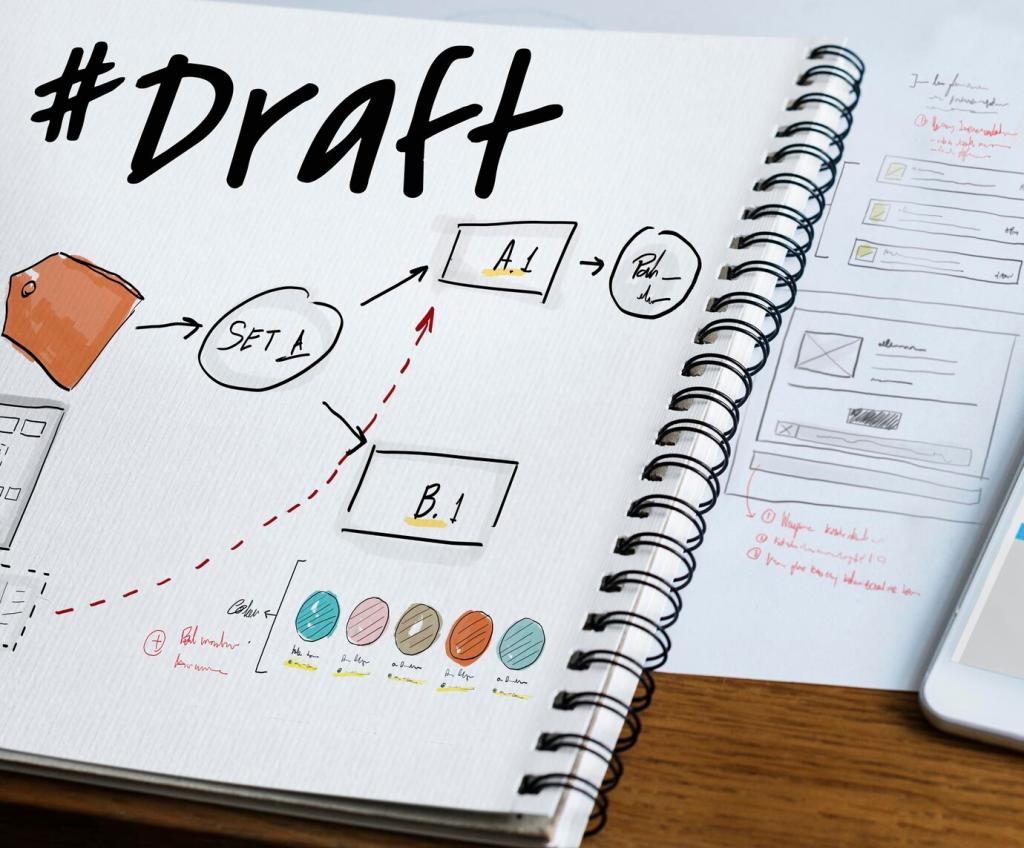
Sketch flows, build clickable mockups, and test with five learners before full production. Early friction found is money saved later. What part could you prototype this week? Post it, and we’ll suggest a lean test plan.
Iterate, Test, and Scale
Compare two versions of a prompt, hint, or visual to see what improves completion or accuracy. Keep tests focused and ethical. Which micro-decision are you uncertain about today? Comment, and we’ll help frame a clean experiment.